Reduce Low-Value Screening Noise
Use minimum transaction amount thresholds to filter out low-value transactions and focus screening on higher-priority risks.
CORE FEATURE 02 / 05
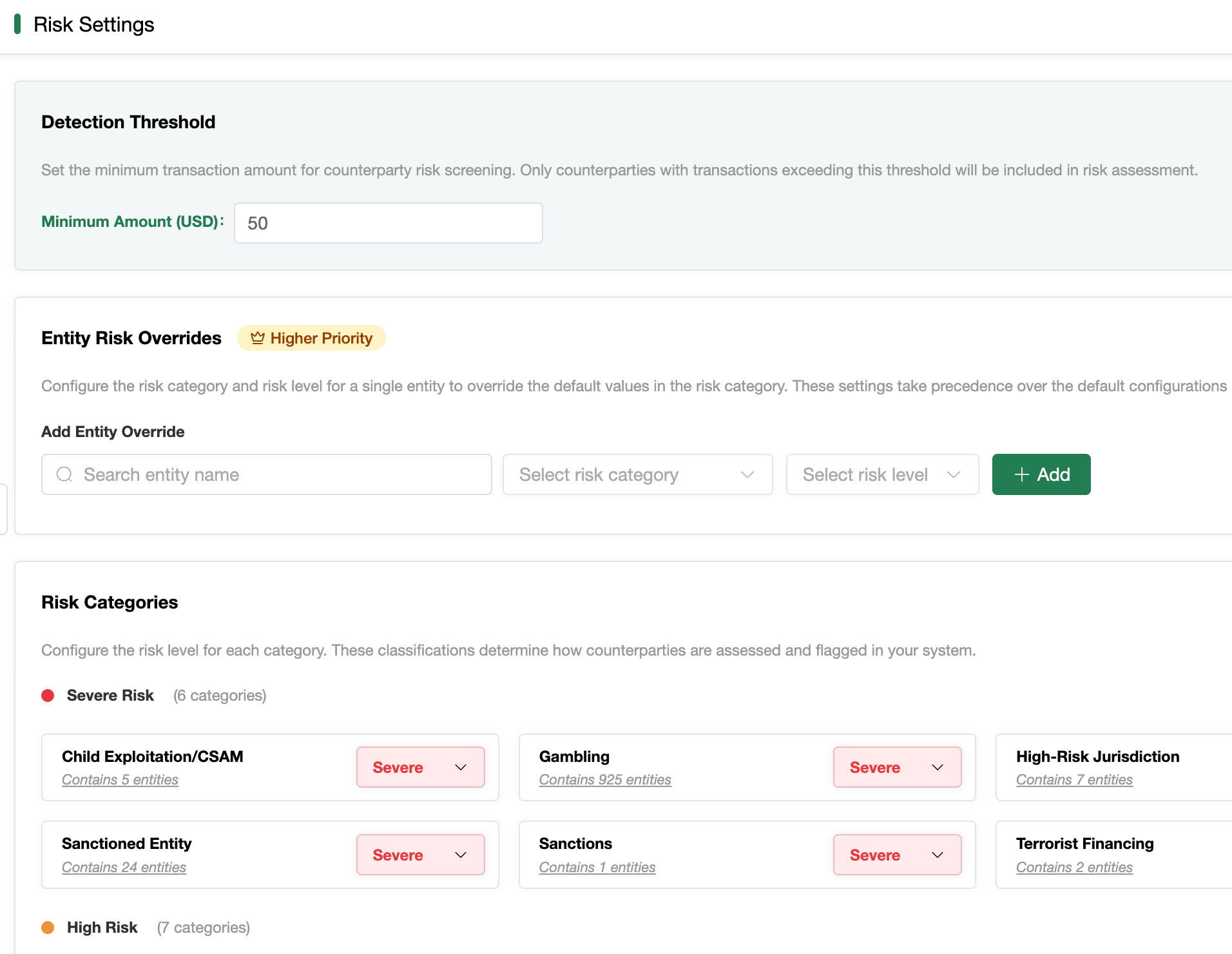
Configure risk levels for different entity items, override category defaults for specific entities, and select jurisdiction-specific screening parameters. Configuration history keeps risk-scoring logic and the settings behind each decision traceable.
01 / THE LOGIC
Combine minimum transaction thresholds, category-level risk rules, and higher-priority entity-specific settings, while keeping the exact configuration used for each screening traceable.
Set a minimum transaction amount for counterparty screening to filter out low-value transactions and reduce screening noise.
Configure risk levels across 25 preset categories, including Sanctions, Gambling, and Illegal Services.
Give entity-specific settings the highest priority. When an individual entity has a custom configuration, it overrides the default rules for its category.
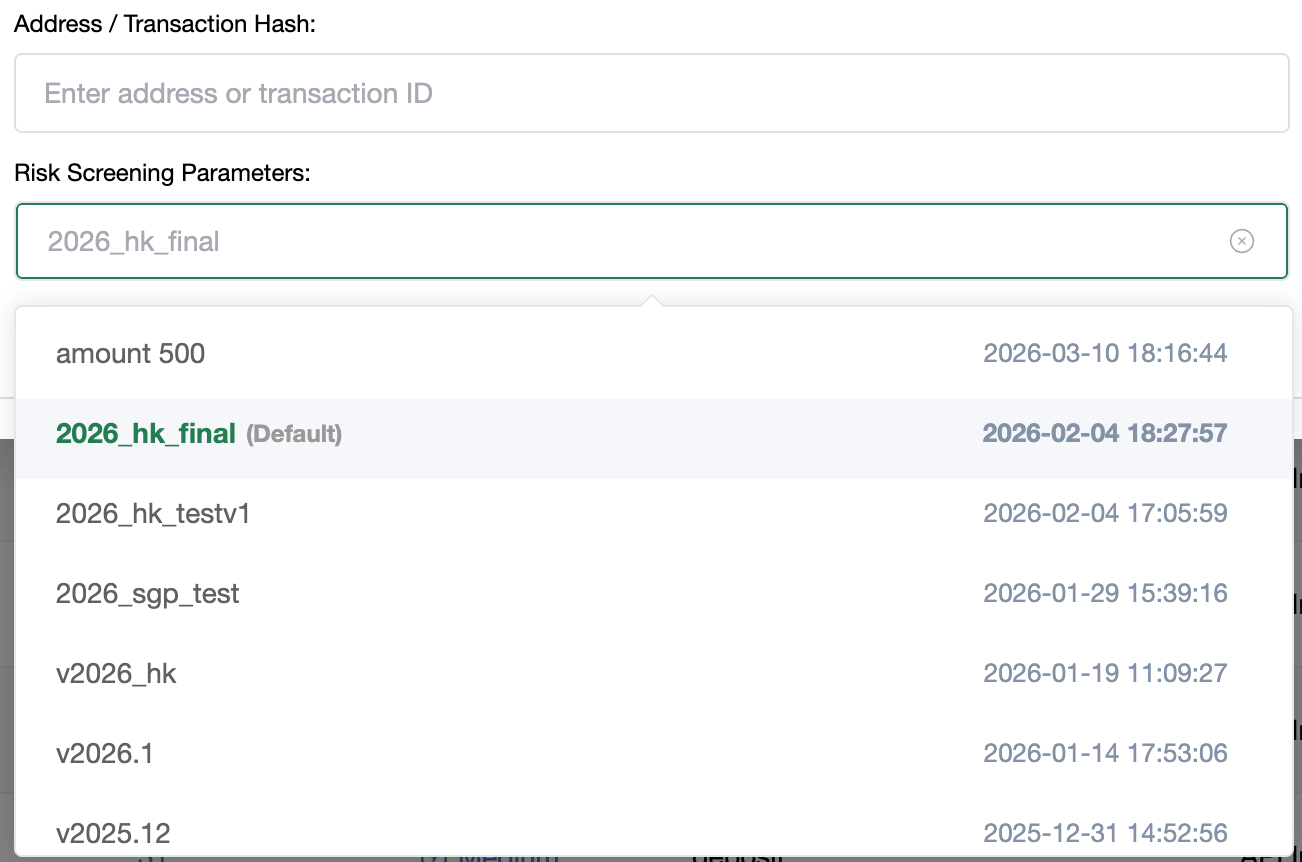
Select a parameter version for screening and trace the exact configuration used directly from the screening result.
02 / INSIDE THE PRODUCT
Explore the key workflows behind risk rule configuration. Select a view to see the controls and details of each capability.
The Risk Settings interface brings together minimum transaction amounts in USD, category-level risk settings, and entity-specific overrides. Entity-specific settings take priority over category defaults.
Select from saved parameter versions when creating a screening task. The default configuration is clearly marked in the selection list.
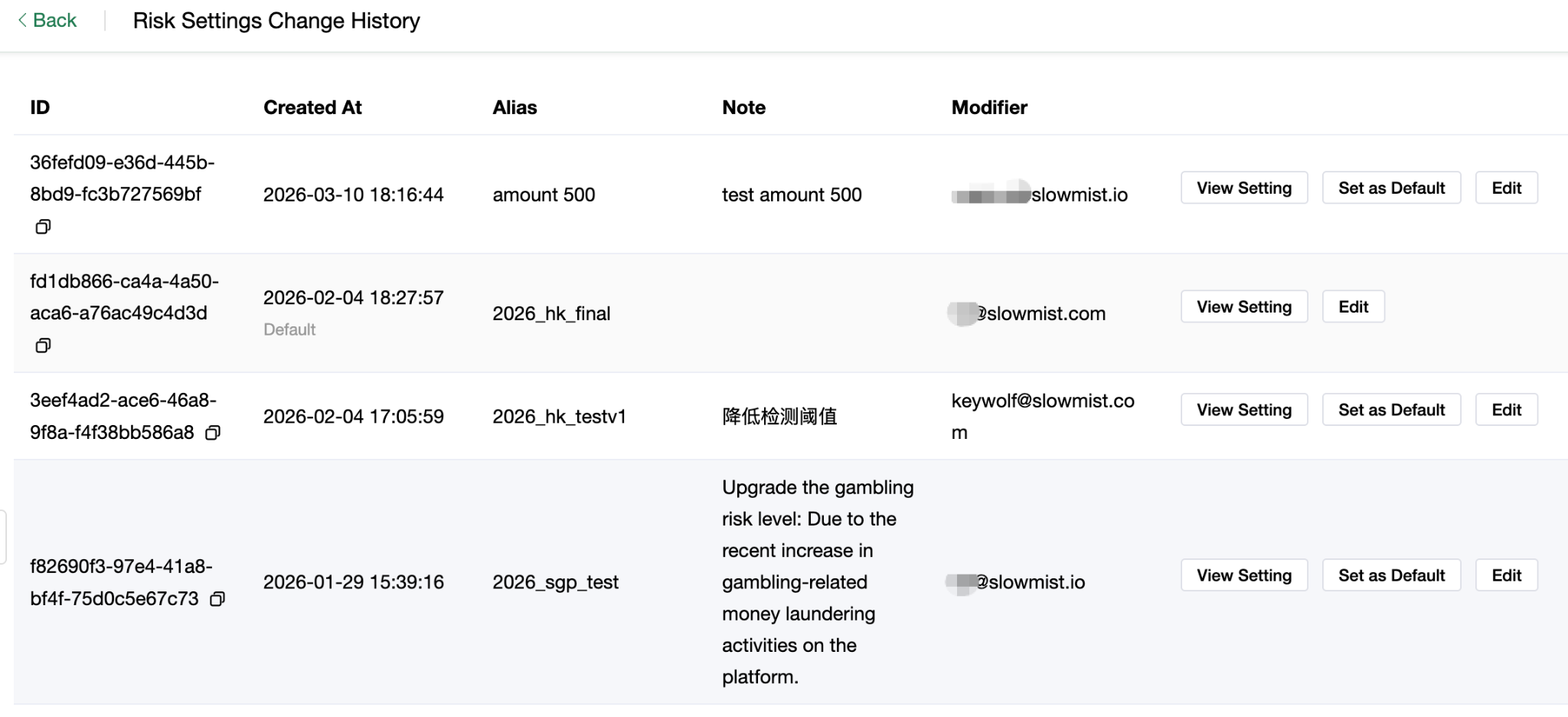
The change history records configuration IDs, creation times, aliases, notes, and modifiers. Users can view, edit, or set a configuration as the default.
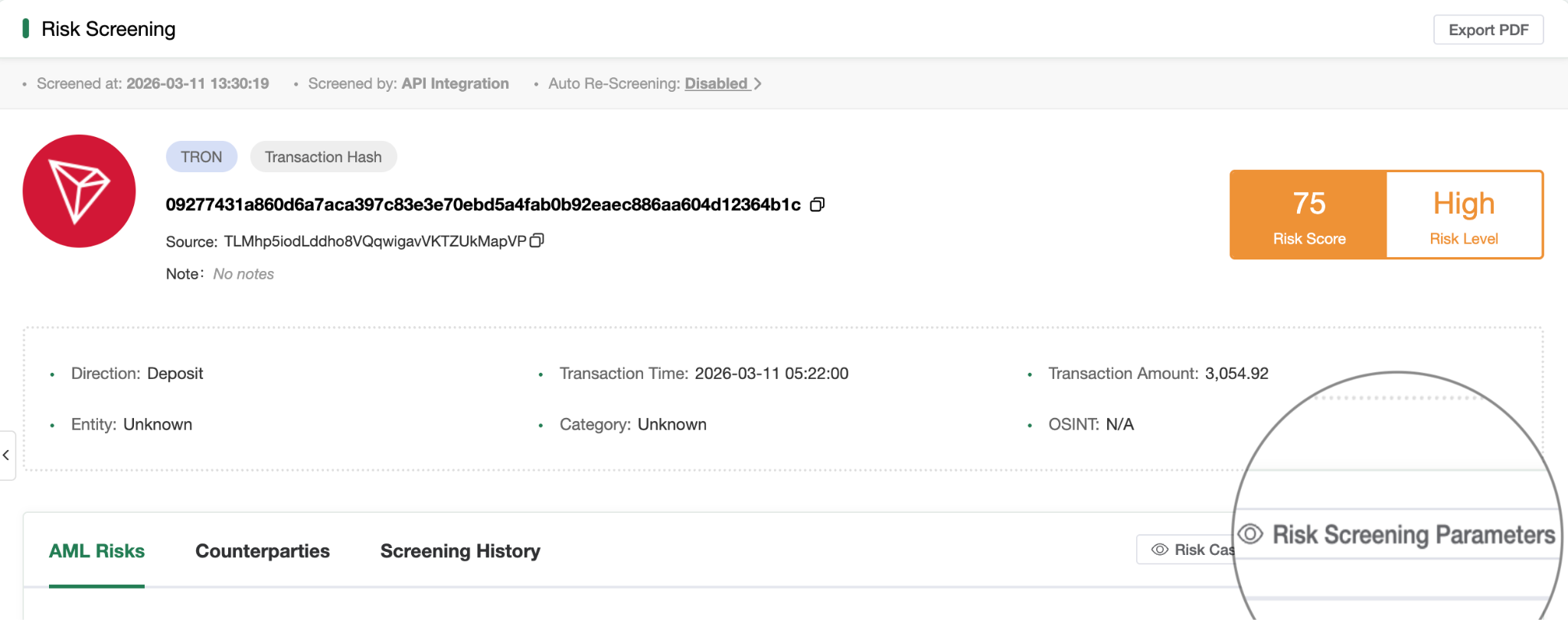
Each screening result is linked to the configuration used for that screening through Risk Screening Parameters, allowing users to trace the exact parameters behind the result.
03 / KEY CAPABILITIES
Use minimum transaction amount thresholds to filter out low-value transactions and focus screening on higher-priority risks.
Load screening parameters on demand to accommodate requirements across different jurisdictions.
Keep the exact risk configuration used for each screening available for review, making the basis of each decision traceable.

A professional, real-time, and configurable AML engine designed for compliance teams at large institutions

Copyright © SlowMist KYT All Rights Reserved.